The one drive worth hiring a car for: the south coast to Teide via Vilaflor
Updated September 18, 2026 · 7 min read

If you hire a car on Tenerife for one thing, make it this: the climb from the southern coast through Vilaflor and the pine forest, out onto the crater floor of the national park, and back down. It is the drive that the island is actually shaped for, and it is the one where doing it yourself beats sitting in a coach — with two exceptions I will come to, because they are real.
This is one route described properly, not a list of ten. A list of ten is how people end up doing none of them.
The shape of the day
You leave the resort strip, climb through banana terraces and then through a landscape that changes completely about three times in an hour. Above Vilaflor — the highest village on the island, and the last place with a café before the park — the road enters the Corona Forestal, a pine forest that runs for kilometres and smells of it.
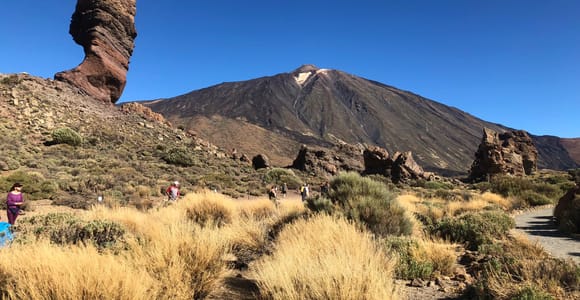
Then the trees stop. That transition, where the forest ends and the crater floor opens out with the peak behind it, is the single best moment of the drive, and it happens without warning. Slow down before you reach it.
From there the TF-21 crosses the caldera past the Parador and the Roques de García, and continues to El Portillo at the far end. You can turn round at any point; you do not have to cross the whole park to have done the drive.
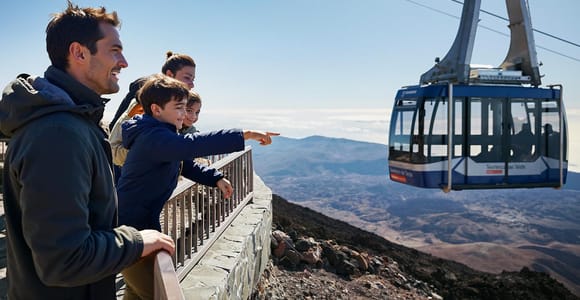
Budget the whole day, not the drive time. Your navigation app will give you a driving figure and it will be honest and useless — the stops are the point, and people who plan two hours end up rushing the only part they came for. For comparison: the guided coach version of roughly this route runs seven hours with the cable car included, and the full-island version with Masca, Icod and Garachico runs nine.
Where to stop, in order
Vilaflor. Last fuel, last reliable coffee, last toilets before a long stretch. Take all three whether you need them or not.
The forest viewpoints on the TF-21. There are several signed laybys as the road climbs. Use a signed one. This matters more than it sounds — see the parking section below.
Boca Tauce, where the road from the west joins and the black lava fields start. The colour change here is the most photographed on the island after the peak itself.
Roques de García and the Mirador La Ruleta, opposite the Parador. This is the stop everyone makes, the rock formations you have seen in photographs, and the start of a walking circuit of a couple of hours if you have the legs and the water for it. We have written that walk up separately in the Roques de García circular walk.
El Portillo at the northern end, where the visitor centre is and where the road drops away towards La Orotava and the north coast.
The parking problem, honestly
The car park at La Ruleta, opposite the Roques, is the pressure point of the entire national park, and it fills from early in the day. In summer, over Christmas and at Easter it can be full well before midday, and the busiest window is roughly midday to 2pm. Arriving between 9am and 9:30am is the difference between parking and circling.
The authorities have been rebuilding this area precisely because of the volume of rental cars and coaches stopping on the roadside — pedestrians walking on the verge of a mountain road was the safety problem driving the works.
Do not solve a full car park by inventing a space. Enforcement here is real and joint: local police, Guardia Civil traffic officers, the Canarian police and environmental agents run controls in the national park and in the Anaga and Teno rural parks. Fines have been issued for parking in disabled bays, in coach loading zones, on yellow lines, in the middle of the carriageway, and for stopping on the rocks at the roadside to take photographs. I am not going to quote you a euro figure, because the reports do not give one and a made-up number is worse than none — but the enforcement is not theoretical.
If La Ruleta is full, drive on. There are other signed stops, the light is better later anyway, and the alternative is a fine and a walk.
What winter changes
The mountain is not a summer-only drive — the light in winter is better and the crowds are thinner. But the crater floor sits at around 2,000 metres, and snow closes the access roads for days at a time each winter. When that happens the closure is absolute: the road is shut, not merely difficult, and no amount of confidence in your driving changes it.
Two rules follow. Check the road status the morning you go, not the night before. And never take a hire car onto a mountain road with chains you have not been issued and are not permitted to fit — most agreements have something to say about that. We have set out what is realistic in Teide in winter.
The other seasonal factor is the calima, the Saharan dust haze, which can turn the view you drove up for into a grey wall. It is not predictable far ahead. If the forecast is clear and you have a free day, take that day rather than the one you had planned.
The two times the guided tour is the better choice
When Masca is on the list. Since 30 July 2026 the Cabildo de Tenerife has operated access controls on the TF-436 into Masca, running 9am to 4pm on the days the fire risk justifies them. On those days small tourist coaches under 7.5 metres get in through a quota and time-slot system; rental cars are explicitly banned, along with the rest of private tourist traffic. The measure is temporary and dynamic rather than permanent, so check the island council’s current position for your date — but if the controls are on and you drive, you will be turned around at Las Lagunetas or Santiago del Teide. This is the one place on Tenerife where the coach genuinely goes where the hire car cannot.
When wine is part of the plan. The high slopes above the north and the Vilaflor side both grow it, and some of the best stops on an island drive are places where you are offered a glass. One operator sells a Teide buggy tour with a wine tasting and tapas for €210 per vehicle precisely because someone else is doing the driving. If a tasting is the point of the outing, book a tour and leave the car at the hotel — Spanish drink-driving limits are stricter than several countries visitors come from, and the road you would be driving is not the one to test it on.
What the car actually buys you
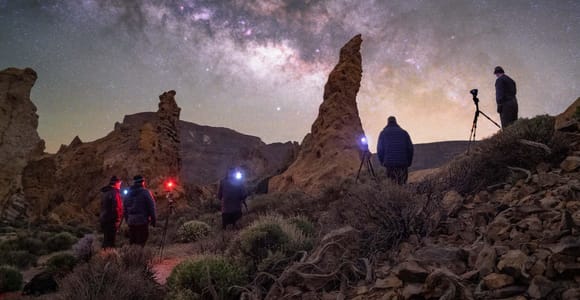
Sunrise and late light, which no bus timetable offers. The freedom to stop at the forest edge for twenty minutes because the light was doing something. A picnic on the crater floor at your own hour rather than a scheduled lunch stop. And the north — La Orotava, Garachico, the coast road — added onto the end of the same day if you have the energy, which is the loop the coaches split into two separate excursions.
That is a good day and it is worth the hire. Whether it is worth hiring for the whole fortnight is a different question, and I have answered it honestly in do you need a car on Tenerife. Before you book, the excess and deposit rules are worth ten minutes.
Compare cars and pick-up points for Tenerife
If you would rather someone else drove it, the Teide tours cover this route in both half-day and full-day form, and half-day or full-day sets out what the extra hours actually add.